Why a Datasheet Isn’t Enough for Your IR System
When you’re picking out an infrared heating system, it’s easy to just look at the voltage and wattage on a spec sheet and think, “Yep, that’s the one.” But here’s the thing: that’s only the start. The real story happens when you actually turn the thing on. That’s where you see if your parts are actually getting the heat they need, or if you’re just wasting power.
The “Rise Curve” (And why it matters)
We spend a lot of time looking at the temperature rise curve. Basically, it’s just a way of seeing how fast a lamp hits its target temperature. If the curve is steep, you’re moving energy fast. That’s great for your cycle times. But speed can be a double-edged sword. If a lamp overshoots the mark, you’re looking at scorched materials or parts that warp because they got too hot too quickly. We tweak the filament density and the thickness of the quartz so the heat climbs in a way that’s predictable. No surprises.
The Battle Against Cold Spots
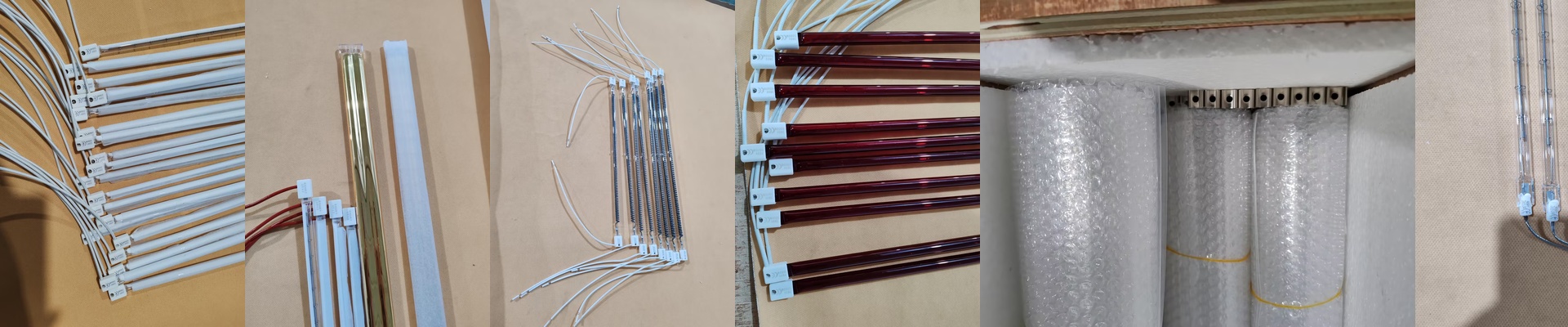
This is where a lot of generic tubes fall apart. You might have the total wattage you asked for, but if all that heat is huddled in the center and disappears at the ends, your parts are going to warp. It’s frustrating. We fix this by changing how the filament is wound and using specific coatings to push the energy exactly where it needs to go. Next time you’re comparing lamps, don’t just look at the total output. Look at the cold spots. We aim for a heat spread that’s tight and consistent from one end of the tube to the other.
Power vs. Control
Now, you could go for high-wattage density. It lets you keep the footprint small and gets things hot fast. But there’s a catch. Those high-output tubes put a lot of stress on your power supplies and cooling fans. If you push for maximum heat flux without a plan for the ambient heat soak, you’re probably going to fry your connectors. It’s a mess you don’t want to clean up. If you’re not sure which way to go, we can run some side-by-side tests. We’ll put our thermal profiles right next to your current setup so you can see exactly how the heat is moving.